



Source: Canva / Civic Media
What Wisconsin Law says about Protests and Carrying Firearms
Civic Media Mornings looks at the state’s open and concealed carry laws to learn what is legal and where the limits are as debate flares over firearms at political demonstrations
Jan 29, 2026, 12:55 PM ET


Share
The national debate continues to intensify around gun laws, open carry, and concealed carry — especially following recent events around protests in Minneapolis. But questions are growing closer to home, too. What does Wisconsin law show is legal when it comes to protests and carrying firearms?
The hosts of Civic Media Mornings, Jamie Martinson and Brian Noonan, call the laws in Wisconsin — clear in many areas, even with the confusion being fueled by speculation and political talking points. They lay out new analysis from Wisconsin Watch, a nonpartisan investigative journalism outlet.
Listen to the complete discussion here:
The Wisconsin Constitution. Article I, Section 25 explicitly guarantees the right to keep and bear arms for “security, defense, hunting, recreation, or any other lawful purpose.” It is one of the most pro–Second Amendment state constitutions in the country.
Open Carry and Protests
Open carry is legal for adults 18 and older who are not otherwise prohibited from possessing a firearm in Wisconsin. No permit or license is required.
This extends to peaceful protests and demonstrations, including those near the State Capitol in Madison. Both open and concealed carry are generally allowed at protests, provided individuals avoid restricted buildings and posted no-carry zones. Clear signage marks those restricted areas.
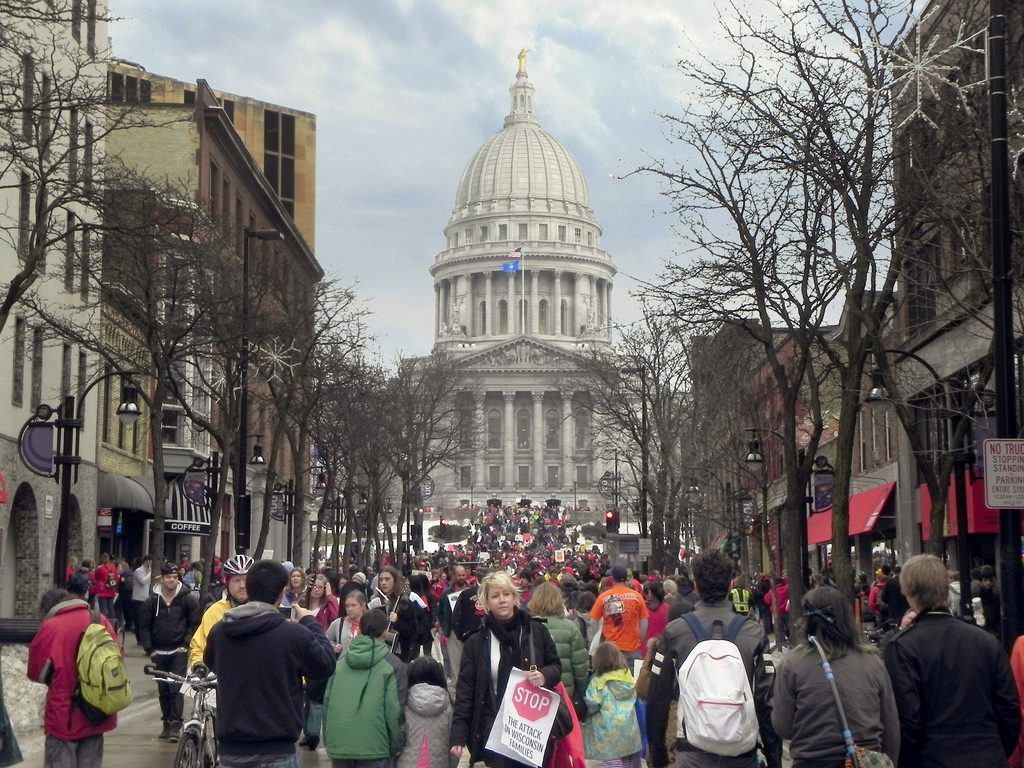
You may recall during protests in 2020, some demonstrators openly carried firearms outside the Capitol. Political activity itself is not a disqualifier under Wisconsin law and is a point often lost in public debate. Minnesota law is similar in this respect.
Concealed Carry
Wisconsin is a shall-issue state for concealed carry licenses. Since 2011, the Department of Justice must issue a license to qualified applicants. And in 2024 alone, more than 67,000 concealed carry licenses were issued or renewed.
However, concealed carry comes with additional rules and restrictions, particularly related to location and behavior.
Who Cannot Carry
Possession of firearms under both state and federal law is prohibited for:
- Individuals with felony convictions
- Those convicted of misdemeanor domestic violence
- People under domestic abuse restraining orders
- Individuals found not guilty of a felony due to mental disease or defect
- Those ruled incompetent by a court or subject to certain involuntary commitments
Immigration status also matters. Lawful permanent residents may own firearms if otherwise eligible. Most non-immigrant visa holders cannot, and undocumented immigrants are barred under federal law from possessing firearms.
Where Guns are Restricted
Location is where Wisconsin’s gun laws become more technical. Firearms are banned on:
- Federal property, including post offices
- School grounds and generally within 1,000 feet of schools
- Police stations, courthouses, and correctional facilities
In cities, overlapping school zones can make restricted areas easy to enter unintentionally. Private businesses and property owners may also prohibit firearms and require armed individuals to leave.
Concealed carry license holders may:
- Carry within school zones (but not on school property)
- Carry in bars and taverns only if they do not drink alcohol
- Carry in vehicles, though a loaded concealed handgun within reach requires a license
What the Law Does — and Does Not — Assume
Wisconsin law is explicit: simply carrying a firearm, openly or concealed, is not disorderly conduct by itself. Additional evidence of criminal or malicious intent is required.
Also, minors under 18 are generally prohibited from possessing firearms, with narrow exceptions for supervised hunting, target practice, and safety training.
The Bottom Line
Wisconsin’s gun laws are permissive but are also highly technical. Both open and concealed carry are generally legal at protests and political demonstrations, including around the State Capitol. This is as long as restricted areas are avoided and all eligibility requirements are met.
As the hosts make clear, political activity does not strip someone of their legal right to carry. The law allows it provided firearms are carried legally and responsibly.
And that, ultimately, is the standard the law demands.
Read the Wisconsin Watch story here:
Guns and protests: What are Wisconsin’s laws on open and concealed carry?

Teri Barr is Civic Media’s Content Creator and a legend in Wisconsin broadcast journalism. Email her at [email protected].
Want More Local News?

Civic Media
Civic Media Inc.
The Civic Media App
Put us in your pocket.